This is Part 5 in our series on Robert Cialdini’s principles and how they show up in modern ecommerce UX. If you missed the earlier parts:
Part 1: Social Proof → Part 2: Authority → Part 3: Scarcity → Part 4: Reciprocity
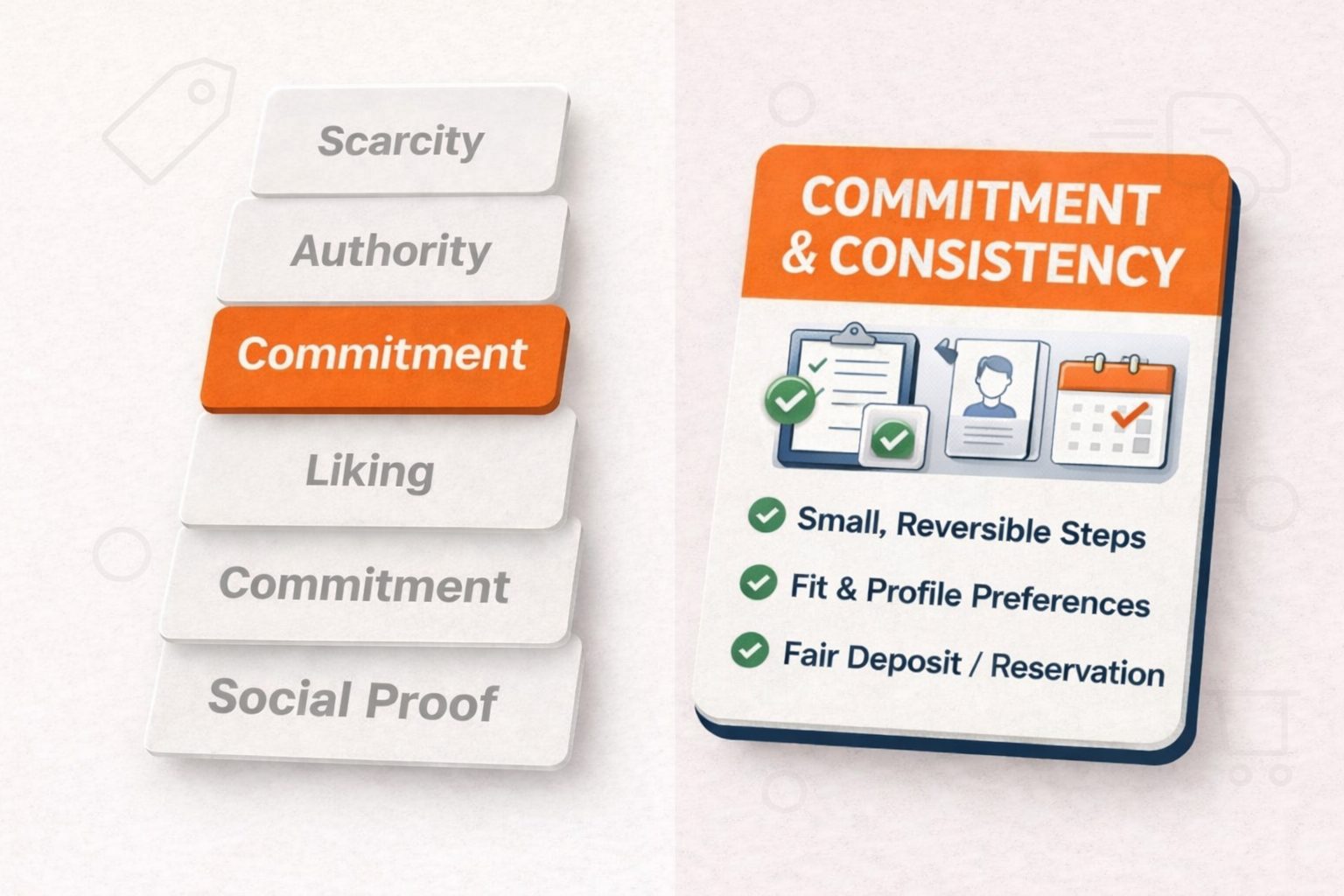
Commitment & Consistency is the principle that people prefer to act in ways that match what they’ve already said or done. In ecommerce, it’s less about pushing harder and more about designing for follow-through.
Because the real competitor often isn’t another retailer — it’s “I’ll do it later”. Customers don’t always reject a product. They postpone the decision. This principle is about turning “later” into a clean next step, without being manipulative.
What Commitment & Consistency means in ecommerce
Commitment & Consistency = a customer makes a small commitment (a preference, saved item, quiz result, build progress, membership), and the store makes it easy to stay consistent with that choice later.
The commitments that work best are the ones that clearly help the customer: they reduce decision fatigue, reduce uncertainty, or reduce effort. If the commitment feels like a trap (forced accounts, sneaky subscriptions), it backfires.
A practical classification: 5 commitment types you can design for
- Micro-commitments — wishlist, save cart, notify-me, choose store, select delivery slot.
- Preference commitments — quizzes and guided finders that capture what the customer wants.
- Process commitments — builders and configurators where progress drives completion.
- Identity commitments — loyalty programs, profiles (“my size”), member benefits.
- Skin-in-the-game commitments — deposits, reservations, pre-orders (use carefully).
Below are real-world examples and UX rules for each.
1) Micro-commitments: “save now, decide later”
Micro-commitments are powerful because they’re low effort and reduce pressure. They help customers progress without asking them to commit to purchase immediately.
Wishlist
A wishlist is a simple commitment: “I’m interested.” It also creates a clean re-entry point (and lets you support the customer later with price drops, restocks, or a saved shortlist).

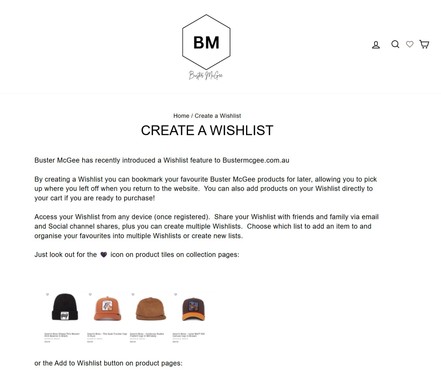
Wishlist as a micro-commitment (save now, return later)
Back-in-stock notifications
When a product is sold out, “notify me” turns frustration into a commitment: “Tell me when it’s available.” Done well, it also gives the merchant a strong demand signal.

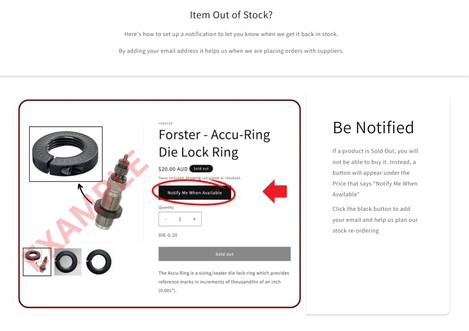
“Notify me when available” turns an out-of-stock problem into intent, from q-store.com.au
UX rules that keep it credible:
- Confirm what happens next (“we’ll email you when it’s back”).
- Ask for the minimum (email first; SMS only if it’s clearly optional).
- Don’t turn notify-me into a marketing subscription by stealth.
2) Preference commitments: quizzes that reduce decision fatigue
Preference commitments work when customers have too many options. A quiz is a structured way for the customer to state: “This is what I want.” If your store then returns a coherent shortlist, customers are more likely to follow through.


Product finder quiz (customer states preferences; store narrows choices), lohy.com.au
UX rules:
- Keep it short (“3–6 questions” is the sweet spot for most categories).
- Explain the benefit (“we’ll recommend 3 options, not 30”).
- Show the logic (why these products match).
- Offer an easy next step: “Shop recommended” or “Save results”.
3) Process commitments: builders and configurators
Builders and configurators are powerful because they combine effort + choice. The customer invests in the process (selecting, personalising, building), and consistency makes them more likely to finish.

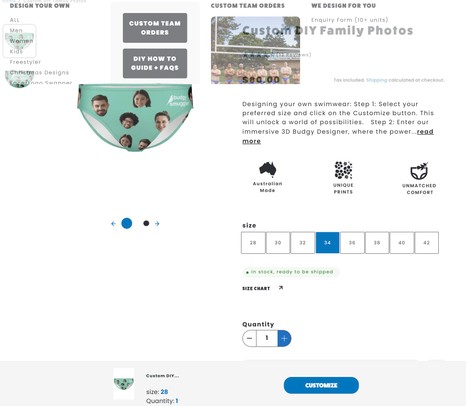
A multi-step builder creates progress, which increases completion, budgysmugglercom.au
Where this works well:
- Gift hampers and bundles (“build your own”).
- Custom products (colour, monogramming, personalisation).
- Complex items (kits, sets, compatibility-based purchases).
UX rules:
- Show steps and progress clearly.
- Make “save progress” obvious (especially on mobile).
- Prevent surprises: price changes, lead times, or constraints should be visible early.
4) Identity commitments: membership, profiles, and “I’m a regular”

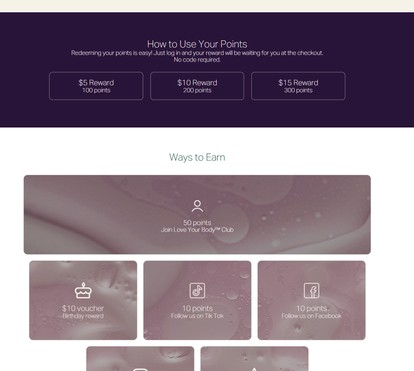
Membership as an identity commitment (a reason to return), www.thebodyshop.com.au
Identity commitments are when customers opt into an ongoing relationship: a loyalty club, a profile (“my size”, “my model”), or member benefits. This can create repeat purchase momentum — but only if the value is clear and the data ask is proportionate.
UX rules:
- Make benefits specific (points, birthday voucher, early access).
- Keep signup optional; don’t gate essentials behind an account wall.
- Be careful with tone: customers should feel helped, not tracked.
5) Skin-in-the-game commitments: deposits and reservations
Deposits, reservations and pre-orders are stronger commitments. They can work well for high-AOV items, made-to-order products, or limited runs — but clarity is non-negotiable.
If you use deposits/pre-orders, customers need to see these answers immediately:
- Is it refundable? Under what conditions?
- What is the lead time?
- What happens if they change their mind?

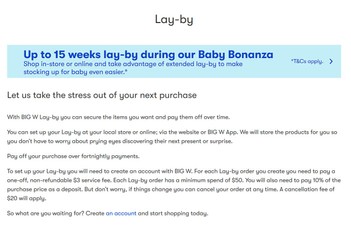
BigW lay-by as an example of skin in the game
Anti-patterns that backfire
- Forced account creation too early (“create an account to see shipping”).
- Subscription tricks (pre-ticked add-ons, unclear cancellation).
- Guilt copy that weaponises consistency (“Don’t abandon your cart!”).
- Fake progress bars that don’t reflect real steps.
- Commitments with unclear consequences (fees, holds, deposits without plain-language terms).
Implementation checklist (1–2 sprints)
- Add wishlist + clear “saved” states across PLP and PDP.
- Add back-in-stock notifications with a clean confirmation message.
- Add “save cart” or persistent cart across devices.
- Add a product finder quiz for one high-choice category.
- Add progress indicators + “save progress” to any multi-step builder/configurator.
- If you use deposits/pre-orders: put key terms above the CTA and simplify the language.
What to measure (so it’s not just theory)
- Quiz start → quiz complete → add-to-cart → purchase
- Wishlist adds → return visits → purchase rate
- Notify-me signups → purchase rate + time-to-purchase
- Saved cart recovery (separate from discount recovery)
- Support tickets mentioning confusion (“why was I charged?”, “how do I cancel?”)
Summary
Commitment & Consistency isn’t about pressure. It’s about helping customers follow through on their own choices:
- Micro-commitments (wishlist / notify-me / save cart)
- Preference commitments (quizzes)
- Process commitments (builders / configurators)
- Identity commitments (membership and profiles)
- Clear, fair stronger commitments (deposits / pre-orders)
Next: Part 6 — Liking (how brands build affinity that converts).