Robert Cialdini (author of Influence: The Psychology of Persuasion) describes Authority as our tendency to follow the guidance of credible experts and institutions — especially when we’re uncertain.
In ecommerce, uncertainty is everywhere (quality, performance, legitimacy). Authority works when it answers a simple question:
“Who credible says this is good / safe / correct?”
This post stays close to Cialdini’s original idea: experts, certifications/standards, and research-backed claims — plus external recognition that functions as authority.
A practical classification of Authority in ecommerce
Authority signals in modern ecommerce usually fall into these buckets:
- Expert authority (critics, specialists, professional reviewers)
- Research-backed authority (clinical studies, citations, science-backed claims)
- Professional endorsement authority (recommended by professionals / experts)
- Certification authority (certified to an external standard)
- Recognition authority (awards and industry recognition)
- Checkout authority (institutional trust signals at the point of purchase: “secure checkout”, payment security/trust marks)
Below are examples grouped by type.
1) Expert authority: critics, specialists, professional reviewers
This is the closest match to Cialdini’s original “Authority” concept. The persuasion mechanism is: “An expert has done the evaluation for me.”
Example: Dan Murphy’s (wine points / ratings shown on product cards)


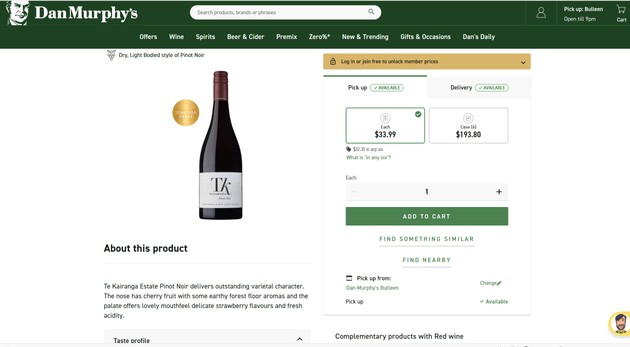
Why it works:
- The evaluation is framed as a rating, not the retailer’s opinion.
- It helps shoppers shortlist fast in a crowded category.
2) Research-backed authority: clinical studies and citations
This is stronger than generic “science-backed” wording because it names sources (journals / studies) that a sceptical shopper could verify.
Example: Paula’s Choice (Research section with journal references)

Why it works:
- It’s concrete: citations (journal + date/pages) are harder to fake.
- It turns a product claim into something that looks like evidence.
3) Professional endorsement authority: “recommended by…”
This is authority via professional endorsement. It works best when it’s highly visible and unambiguous.
Example: Cetaphil (Dermatologist Recommended Brand)

Why it works:
- It frames the brand as validated by domain professionals.
- It reduces perceived risk for sensitive / health-adjacent categories.
4) Certification authority: certified to an external standard
Certifications are powerful authority signals because they’re issued by an external body with defined criteria.
Example: Ecosa (B Corp certification + third-party marks)

Why it works:
- It’s external (not self-issued).
- It’s visually distinct and easy to recognise.
5) Recognition authority: awards & industry recognition
Awards function as authority when they’re relevant and clearly attributable.
Example: Paula’s Choice (Allure award badge)
Why it works:
- Recognition comes from outside the brand.
- It provides a fast heuristic for quality.
6) Checkout authority: institutional trust at the point of purchase
Even when shoppers like the product, checkout can trigger a final “risk check”. Checkout authority signals work when they communicate security and legitimacy without overloading the UI.
Example: House (cart/checkout area with payment systems logos)

Why it works:
- It reduces last‑minute transaction anxiety.
- It signals the store takes payment security seriously.
Quick checklist: implementing Authority without overreach
If you want authority signals that feel credible (not like a stretch):
- Attribute authority (name the expert, standard, institution, journal, etc.).
- Be specific (numbers, standards, citations > vague superlatives).
- Put authority where uncertainty spikes:
- category page → shortlisting
- PDP → final evaluation
- checkout → legitimacy reassurance (light touch)
- Avoid “badge soup”. One strong authority signal beats ten weak ones.
Summary
Cialdini-style Authority in ecommerce is about credible external expertise or validation:
- Expert ratings (critics / points)
- Research citations (journals, studies)
- Professional endorsement (“recommended by”)
- Certifications (external standards)
- Awards/recognition
- Checkout trust cues (“secure checkout”)
That’s Part 2. Next in the series we’ll cover another Cialdini principle — but this post is intentionally focused on Authority only.
Check also our previous post about Social Proof principle.