Robert Cialdini is a behavioural psychologist best known for his book Influence: The Psychology of Persuasion, which distils decades of research into practical principles behind why people say “yes”. Those principles show up everywhere in modern ecommerce UX—often without us noticing.
This article is Part 1 in a series about how Cialdini’s persuasion principles show up in modern ecommerce.
We will cover the other principles (Authority, Scarcity, Reciprocity, Liking, Commitment & Consistency, Unity) in separate posts. Here we focus on Social Proof only.
Social proof is simple: when shoppers feel uncertainty, they look at what other people did and what other people think. In ecommerce, where customers can’t touch the product, this is one of the most reliable ways to reduce friction.
What is social proof in ecommerce?
In practice, social proof usually means:
- Star rating + review count
- Written reviews (and ideally photos)
- “Write a review” prompts (signals an active customer base)
- Testimonials (common in high-consideration categories)
- Third‑party reputation widgets (e.g. Trustpilot / Reviews.io style blocks)
A useful way to think about it:
Social proof answers the question: “If I buy this, will I regret it?”
Where social proof appears (with real examples)
1) Category pages – shortlisting before the product page
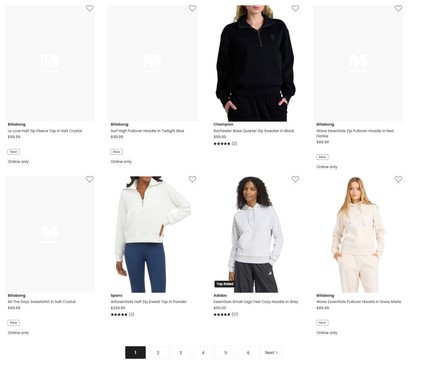
Customers don’t start on a product page. They browse categories and shortlist. If you show social proof here, you help them filter options faster.
Example: Myer website (category page)

Why it works:
- The shopper is still comparing items.
- Showing rating/review cues early reduces “extra clicks” just to confirm trust.
Example: Pet Barn website (category page)

Why it works:
- In categories with many similar products, ratings act like a fast heuristic.
- It reduces analysis paralysis.
2) Product pages (PDP) – the “moment of truth”
This is where a customer asks: “Is this worth it for me?” A good PDP makes social proof easy to find and easy to scan.
Example: House website (product page)

Why it works:
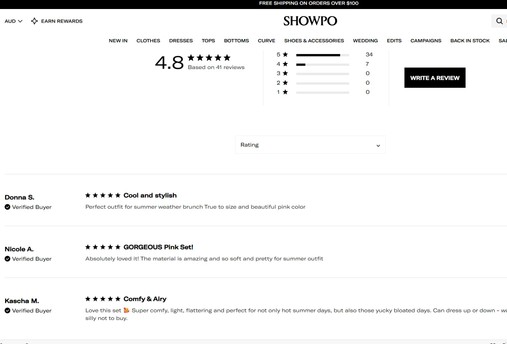
- Reviews reduce uncertainty about quality and value.
- The review block supports the decision right before “Add to cart”.
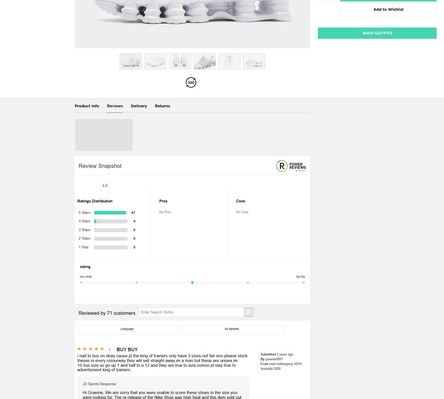
Example: JD Sports website (product page)

Why it works:
- Apparel/footwear has high uncertainty (fit, comfort, durability).
- Reviews reduce returns anxiety.
Example: Showpo website (product page)

3) High‑consideration purchases – reviews + reassurance
For expensive or complex items, shoppers want more than stars. They want to be reassured that delivery, installation, and after‑sales support won’t be painful.
Example: Appliances Online website (product page)

Why it works:
- Reviews provide product-level confidence.
- Reassurance-style elements reduce perceived downside.
4) Store‑level trust – third‑party reputation widgets
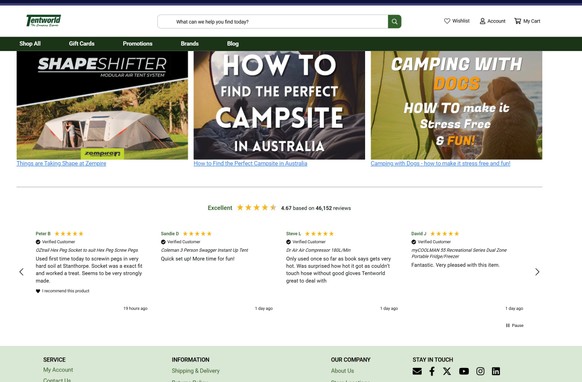
Sometimes the question is not “Is this product good?” but “Is this store legit?” Third‑party reputation blocks help with that.
Example: Vistaprint website (Trustpilot area)

Example: Tent World website (homepage trust widget)

What makes social proof effective (quick checklist)
If you are implementing social proof, focus on the basics first:
- Show star rating + review count (stars alone can look fake).
- Make reviews easy to access (don’t bury them behind multiple clicks).
- Include some negative reviews (credibility boost).
- Collect reviews that match the category risk:
- fashion → size/fit, fabric feel, “true to photos”
- appliances → delivery experience, reliability, support
- Add social proof earlier in the journey (category pages), not only on PDPs.
Summary
Social proof is powerful because it reduces uncertainty.
- Use it on category pages to speed up shortlisting.
- Use it on product pages to support the buying decision.
- Use third‑party reputation to reduce “is this store legitimate?” anxiety.
That’s the end of Part 1. In the next article, we will take another Cialdini principle and show how it appears in modern ecommerce.